
Key Considerations When Selecting a Site for a Community Safe Room
Investing in a community storm shelter is a critical step toward ensuring the safety of your students, employees, or residents. However, the effectiveness of a shelter is not just determined by its engineering, but by its placement. Selecting the right site requires a balance of accessibility, geological stability, and strategic logistics to ensure that when the sirens sound, everyone can reach safety in time.
Prioritize Proximity and Response Time
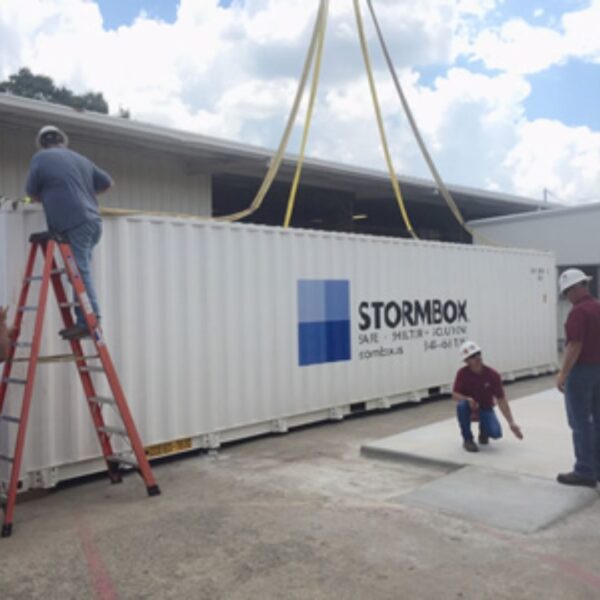
The most important factor in siting a community safe room is travel time. According to FEMA guidelines, occupants should be able to reach the shelter within five minutes of a warning. For large industrial campuses or sprawling school grounds, this may mean installing multiple units, such as the 8×20 Stormbox, strategically near high-occupancy areas rather than a single distant unit. The goal is to minimize the distance between daily activities and life-saving protection.

Ensure Universal ADA Accessibility
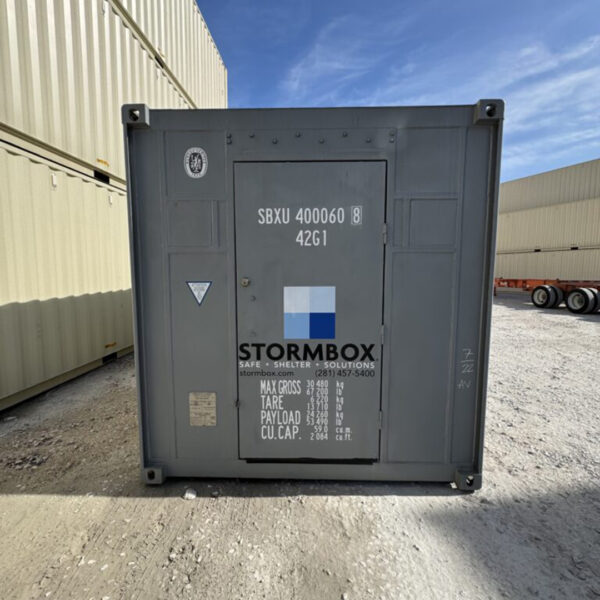
A community safe room must be accessible to everyone, regardless of mobility levels. When selecting a site, ensure the path to the shelter is clear, well-lit, and level. Stormbox units are designed for above-ground, ADA-compliant entry, which eliminates the hazards of stairs or steep ramps. The site should feature a paved or concrete approach that allows wheelchairs and walkers to transition seamlessly from the main building to the 3’3” wide shelter doors.
Foundation and Engineering Requirements
A storm shelter is only as strong as its connection to the earth. To withstand EF-5 winds, units must be anchored to a 16-inch reinforced 4,000 PSI concrete slab. When choosing a site, consult with engineers to ensure the ground is stable and free of underground utilities or plumbing. Proper drainage is also essential; the site should be graded to prevent water from pooling around the base, ensuring the entrance remains clear during heavy torrential rains.
Strategic Clearance and Safety Zones
Finally, consider the surroundings. A community storm shelter should be placed away from large trees, tall power lines, or heavy unsecured equipment that could become falling hazards or block the entrance during a storm. While Stormbox units are impact-tested to withstand debris, maintaining a clear “safety zone” around the unit ensures that the door remains unobstructed for emergency responders after the storm has passed.
Secure Your Site with Stormbox
Selecting the ideal location is the foundation of a successful emergency plan. Whether you need the 27-person capacity of our 8×20 model or the 49-person capacity of the 8×40 Stormbox, our team is here to help you evaluate your site for maximum efficiency. Contact Stormbox today to discuss your facility’s layout and ensure your community is protected by the best in above-ground safety technology.